
The 'Look Who Died' Scam: A Dangerous Social Engineering Trick
I Just Saw One This Morning!
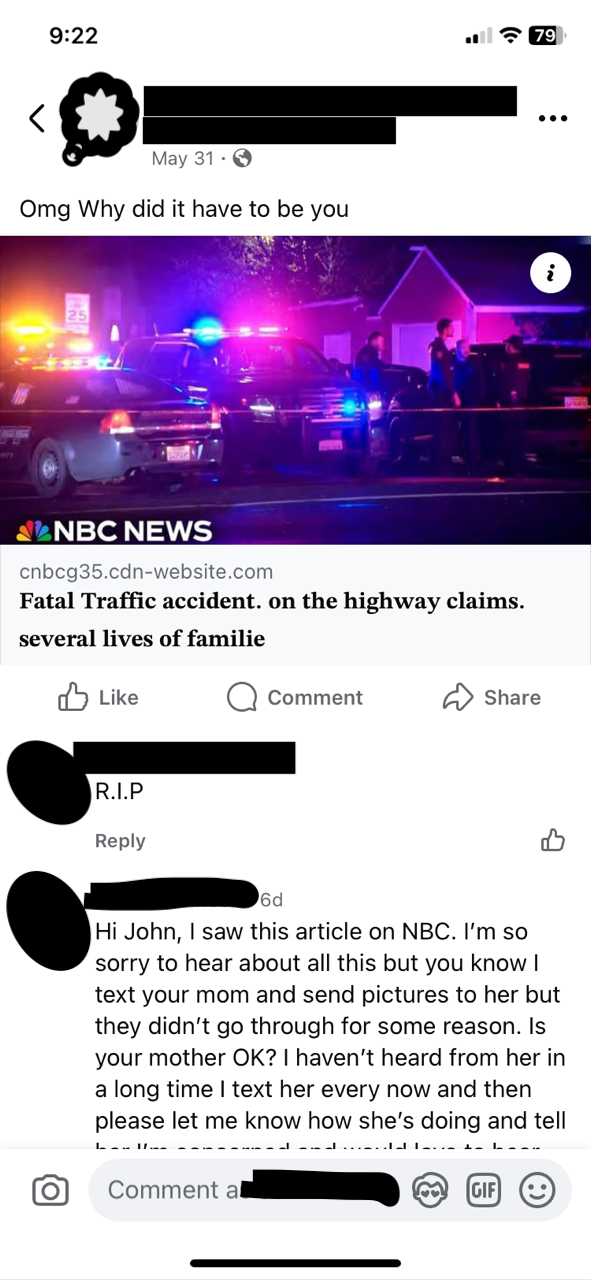
I received a Facebook Notification this morning, from someone I did not know, who tagged a friend of mine in a story indicating that either he or his family had been involved in a fatal car crash. There were not many details other than a video link. Immediately, I noticed that the headline was full of grammatical errors and the video's URL was suspiciously not from NBC. So, since I just saw one of these with my own eyes, I wanted to share some information about what is known as the "Look Who Died" scam:
Understanding the 'Look Who Died' Scam
The 'Look Who Died' scam is a deceptive scheme that exploits the emotional vulnerabilities of individuals by suggesting that someone they know has passed away. This scam typically manifests on social media platforms where users are frequently engaged in sharing news and updates about friends and family. The perpetrators design posts that may include compelling headlines such as 'Look Who Died' followed by a name or a fabricated news article link, prompting individuals to investigate further.
At the core of this scam lies a calculated psychological tactic aimed at instilling fear, concern, and urgency within the targeted audience. When confronted with the possibility of a friend's or loved one's demise, many individuals experience strong emotional reactions, often leading them to take impulsive actions such as clicking on a malicious link. Once the user is enticed to click, the scammer might redirect them to malicious websites that install malware on their devices or collect personal information under false pretenses.
Real-world examples have demonstrated the effectiveness of this strategy. For instance, on various social media platforms, posts claiming that popular personalities or local figures have died often go viral, garnering thousands of shares and comments within hours. These posts can trigger a whirlwind of activity, resulting in users inadvertently downloading harmful software or sharing sensitive data.
The 'Look Who Died' scam highlights the importance of remaining vigilant and questioning the validity of shocking news stories that appear in social feeds. By understanding the underlying mechanics of this scam, individuals can better protect themselves from becoming victims of social engineering tactics designed to exploit their emotions.
Red Flags and Warning Signs
Identifying potential scams, particularly the 'Look Who Died' trick, is essential for protecting oneself from social engineering tactics. These scams are often characterized by several common elements. First, suspicious URLs are prevalent; attackers might use websites that mimic official sources but contain slight discrepancies, such as unusual domain suffixes or misspellings. If a link appears dubious or does not align with the expected web address of a trusted source, it is crucial to avoid clicking on it.
Emotional triggers also form a core component of such scams. Scammers commonly exploit feelings of sadness or shock, aiming to evoke an immediate and emotional response from the viewer. Messages might depict a shocking incident involving a celebrity or a public figure, utilizing phrases that elicit a sense of urgency or necessity to share the content. Recognizing these emotional tactics is vital; legitimate news typically presents information in a more measured tone.
Additionally, the types of messages used in these scams often follow a similar narrative style. Look for vague language, lack of specifics, and a sensationalist approach that raises red flags. Legitimate announcements usually provide clear facts, including the date, context, and verified sources. If a message lacks this clarity and instead tries to provoke immediate sharing based on hearsay, it is likely a scam.
To effectively assess the validity of any such claims, individuals should adopt a critical mindset. It is prudent to verify stories independently by checking reputable news outlets or established information aggregators before reacting or sharing. By doing so, one can significantly reduce the risk of falling victim to these harmful scams and contribute to a more informed online community.
What to Do if You Encounter the Scam
Encountering the 'Look Who Died' scam can be alarming, but taking measured steps can help mitigate its dangers. If you or someone you know accidentally clicked on a suspicious link, the first action to take is to immediately disconnect from the internet to prevent any potential malware download or data leak.
Next, assess your device's security settings. For individuals using smartphones or tablets, navigate to the settings menu and review the security configurations. On computers, ensure that firewalls are active and properly configured. This can help in defending against unsolicited inbound connections and threats.
Running a thorough antivirus and anti-malware check should follow. Utilize trusted software to scan your device for any unauthorized applications or harmful entities that may have infiltrated after clicking on the link. Make sure that these programs are up-to-date to enhance their effectiveness in detecting new variants of malware related to such scams.
In addition, maintaining safe browsing practices is essential to safeguard against future threats. Always be cautious when clicking on links, especially those that seem suspicious or come from unknown sources. Periodically clearing your browser’s cache can also help reduce exposure to malicious content.
Finally, it is crucial to report any encounters with this scam to the appropriate social media platform. Most sites have mechanisms to report fraudulent activity, which can assist in curtailing the spread of these scams and protect other users from falling victim to this form of social engineering.
Staying Safe Online: General Tips for Avoiding Scams
In today's digital landscape, online scams are prevalent and continuously evolving. To protect oneself effectively, individuals must adopt prudent practices that encompass a variety of cybersecurity measures. One of the fundamental strategies is to regularly update privacy settings across all social media platforms. Ensuring that personal information is accessible only to trusted connections can significantly mitigate risks associated with identity theft and unauthorized access.
Another essential practice is the creation of strong, unique passwords for each online account. Utilizing complex passwords that incorporate a mix of letters, numbers, and special characters makes them more difficult for cybercriminals to crack. Additionally, employing password managers can help users store and generate secure passwords without the need to remember them all.
It is equally important to exercise caution when disclosing personal information, especially on casual or informal platforms. Scammers often utilize social engineering tactics to extract sensitive data by preying on curiosity or fear. Before engaging with any unsolicited messages or content, users should verify the legitimacy of the source. This step is crucial for avoiding scams like the 'Look Who Died' scam, which manipulates emotional triggers.
Moreover, educational resources such as webinars, online courses, and articles on cybersecurity can fortify one's understanding of emerging threats. Engaging with reputable organizations dedicated to online safety can provide users with the tools necessary to identify and combat various scams. Regularly updating one's knowledge base is critical, as cyber threats are constantly adapting.
By implementing these safety measures and remaining vigilant, individuals can significantly decrease their likelihood of falling victim to online scams. Staying informed and practicing cybersecurity best practices is essential for navigating the complex digital environment safely.
Contact:
Get in touch for personalized IT solutions today:
© 2026 Lime Tree IT, LLC. All rights reserved.